
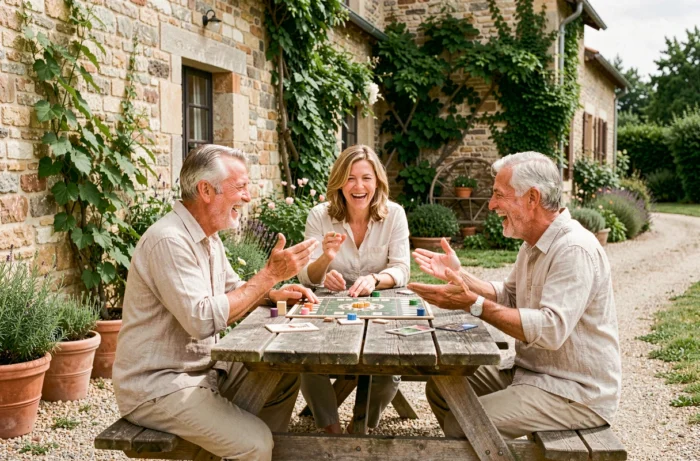
In 2024, the French dedicate their free time to activities that reflect a need for movement, social connection, and disconnection. Two criteria dominate the choice of leisure: the pleasure experienced and the necessary budget. Despite the growing presence of screens, a large majority of the population remains attached to physical forms of entertainment: paper books, movie theaters, board games, sports fields.
This ranking is based on attendance data, recent declarative surveys, and the evolution of practices since the health crisis.
1. Regular sports practice: the leisure activity that has become part of daily life
Sport is no longer an occasional leisure activity. The proportion of French people who engage in physical activity at least once a week has been steadily increasing for several years, reaching an unprecedented level. This growth is not limited to a specific age group: it affects adolescents, working adults, and retirees alike.
What distinguishes sports practice from other leisure activities is its dual function. It serves a purpose of physical and mental health, while also creating social connections. Football remains the most popular sport in terms of registered participants, but walking, running, and cycling dominate in terms of free practice, without club membership.
A detailed article lists the favorite leisure activities on Utile au Quotidien by cross-referencing several national surveys, confirming the leading position of sport in the ranking.
- Walking and hiking appeal to all generations, without equipment constraints or entry costs.
- Team sports (football, basketball, handball) continue to play a structuring role in social life, especially among children and adolescents.
- Outdoor activities (trail running, climbing, kayaking) are steadily increasing, driven by a desire for digital disconnection.
Sport has become a marker of daily well-being, not just a weekend pastime. Public policies support this trend: several regions are investing in access to sports for all, with initiatives targeting audiences distant from practice.
2. Reading and paper books: a surprising resistance in the digital age
Despite the competition from streaming and social media, reading remains a massively practiced leisure activity. A majority of French people report having read a novel, essay, or story in the past year. Paper books, in particular, retain a place that digital formats have not diminished.
This resistance can be explained by the sensory and disconnected dimension of reading on paper. In a context where the French spend more than half of their free time in front of a screen, physical books represent a deliberate break. Independent bookstores and municipal libraries remain cultural prescription venues, more so in France than in most European countries.
Reading also impacts family life. Parents who read with their children pass on a ritual that continues into adolescence. Book clubs, both online and in-person, are multiplying and creating active communities around various genres (crime fiction, contemporary literature, manga).
Why paper books withstand digital
Nearly eight out of ten French people remain attached to physical forms of leisure, according to a study by the E.Leclerc Observatory of New Consumption conducted with Viavoice. Paper books embody this preference: no battery, no notifications, no eye strain from screens. For many, reading a book is precisely about not being connected.
The publishing market in France confirms this structural trend. Sales of physical books remain stable, driven by comic books, manga, and children’s literature.
3. Cinema: the return to a collective ritual
Cinema has regained its audience. In 2024, six out of ten French people report having gone to the cinema in the past year, a level comparable to that before the health crisis. Streaming has not killed the movie theater: the two coexist, with complementary uses.
The cinema offers an experience that the living room cannot replicate. The sound immersion, the large screen, and the event-like nature of a screening make it a unique leisure activity. Multiplexes have invested in technologies (Dolby Atmos sound, premium seating, IMAX screenings) that widen the gap with home viewing.
A family and generational leisure activity
Cinema remains one of the most accessible cultural outings in terms of price, especially with unlimited subscription cards. For families with children, a trip to the cinema represents a complete outing: travel, film choice, discussion after the screening. This shared ritual partly explains the resilience of attendance.
- Animated films and blockbusters generate the highest family attendance.
- Event screenings (premieres, marathons, re-releases of classics) attract a loyal cinephile audience.
- Independent cinemas focus on art-house programming, debates, and meetings with directors to differentiate themselves.
Cinema functions as both a social and cultural leisure activity. For many French people, going to the cinema remains the first reflex when it comes to spending time with friends or as a couple. This relational dimension, which individual streaming does not replace, ensures cinema a lasting place in the top three favorite leisure activities.
Sport, reading, cinema: these three activities share a common point. They require stepping away from the daily screen, engaging physically or socially, and dedicating a defined time to a chosen experience. In a country where the digitization of practices progresses each year, this persistent preference for tangible leisure activities is a distinctive feature of French habits.