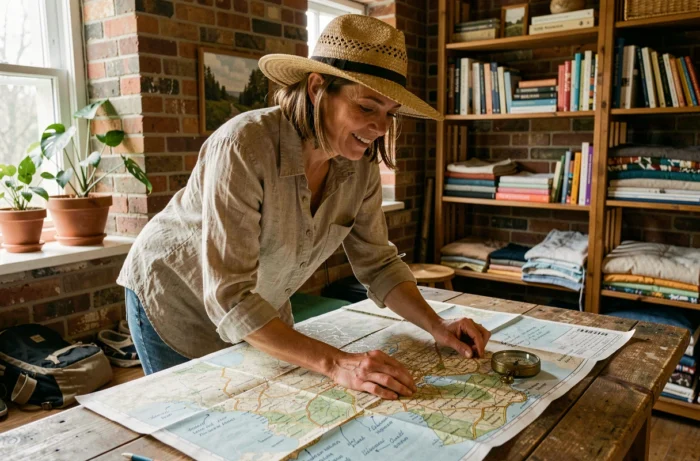
Traveling differently refers to an approach to movement that prioritizes low-impact modes of transport, longer stays in the same area, and attention to the concrete effects of tourism on the places visited. This operational definition distinguishes the concept from simple “green” stays or marketing labels: it is about changing the very structure of travel, not just its destination.
Train Ticketing in Europe: What’s Changing for Organizing a Train Journey
The train is increasingly capturing the attention of travelers looking to reduce the carbon footprint of their journeys. A European regulatory evolution is reinforcing this trend: a proposed regulation on multi-operator train ticketing aims to allow the purchase of a single ticket covering multiple companies on the same international route.
Until now, connecting two European cities by rail often involved booking separately with each national operator, with fares and schedules that were difficult to compare. The text under discussion in the European Parliament provides for better access to fare and schedule data, which would simplify the construction of long itineraries without resorting to air travel.
For travelers who organize their own adventures, this reform could transform rail planning by eliminating the fragmentation of bookings. Specialized platforms for organizing alternative travel are already compiling this information, as can be seen on https://www.allers-retours.fr/, which gathers useful resources for building responsible itineraries.
Proximity Travel in France: A Fundamental Change, Not a Passing Trend
Tourism attendance data shows a lasting increase in the appeal of domestic destinations and short stays. This movement, initiated during the post-pandemic period, is confirmed year after year and is no longer just a reflex of retreat.
The Climate Action Network published a report in September 2026 highlighting the limitations of a French tourism strategy too focused on attracting distant visitors. The document calls for prioritizing French and European clientele, strengthening rail connections, and curbing the growth of air traffic.
What Proximity Changes in Preparation
Choosing a nearby destination alters the planning logic. The transport budget decreases, freeing up resources for accommodation or activities on-site. Travel time shortens, making stays of just a few days viable, without the frustration of spending half the time in transit.
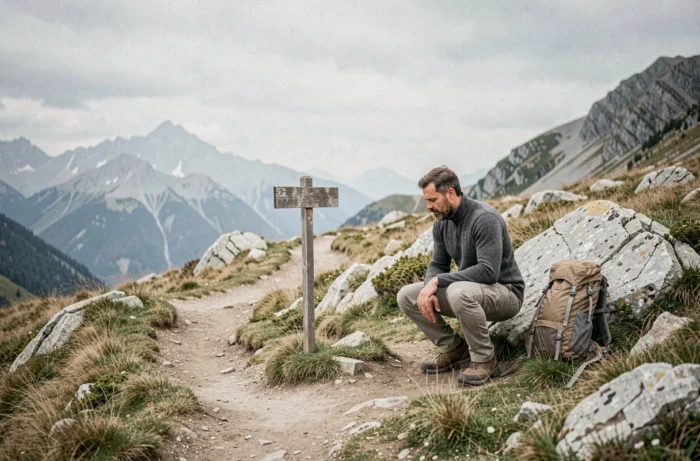
A well-constructed proximity stay offers a real change of scenery as long as one steps away from saturated itineraries. Hiking in less frequented mountain ranges, immersive stays with locals in rural areas, or micro-adventures in nature allow for rediscovering familiar landscapes from a different perspective.
Responsible Tourism: The Criteria That Really Matter
The European Travel Commission observes in a 2025 study a rise in behaviors classified as “green” among European travelers. This trend focuses on two specific axes: the choice of transport mode and the seasonality of the stay.
Traveling off-season reduces pressure on tourist sites and often allows access to lower rates. Prioritizing low-emission transport (train, bus, bike) is the most direct lever on a trip’s carbon footprint.
Criteria Grid for Evaluating a Responsible Trip
Rather than relying on labels, applying a simple grid allows for checking the coherence of a travel project:
- Does the main mode of transport represent the largest share of emissions for the stay, and is there a low-impact alternative available on this route?
- Does the chosen accommodation redistribute a significant portion of its income to the local economy (direct jobs, local sourcing)?
- Does the departure period allow for avoiding high season at the intended destination, thus reducing overcrowding?
- Do the planned activities respect local ecosystems without generating nuisances for residents?

Micro-Adventure and Short Stays: Rethinking the Travel Format
The micro-adventure is based on a simple principle: an immersive experience accessible within a few hours of travel, often over a weekend or even a single night. This format caters to both families and solo travelers and does not require a significant budget.
Specifically, a micro-adventure can take the form of a night camping in a regional park, a two-day river descent by kayak, or a mountain crossing by bike. The common point: moderate physical effort, real disconnection, and direct contact with nature.
Adapting the Format to One’s Constraints
A multi-week trip to the other side of the world is not the only valid model. For those with limited vacation time or traveling with young children, short stays repeated several times a year can effectively replace a single long trip.
This approach also changes the relationship with time: instead of rushing from one site to another to “make the most” of a long-haul flight, a short stay nearby allows for slowing down, exploring an area in depth, and returning if the experience warrants it.
The debate on responsible tourism now goes beyond environmental concerns. The Climate Action Network’s report from September 2026 reminds us that the economic model of French tourism remains structurally oriented towards attracting distant flows, while the demand for low-impact and proximity travel is growing. How tourism offices and local authorities integrate this reality into their strategies will determine whether traveling differently remains an individual endeavor or becomes a shared standard.