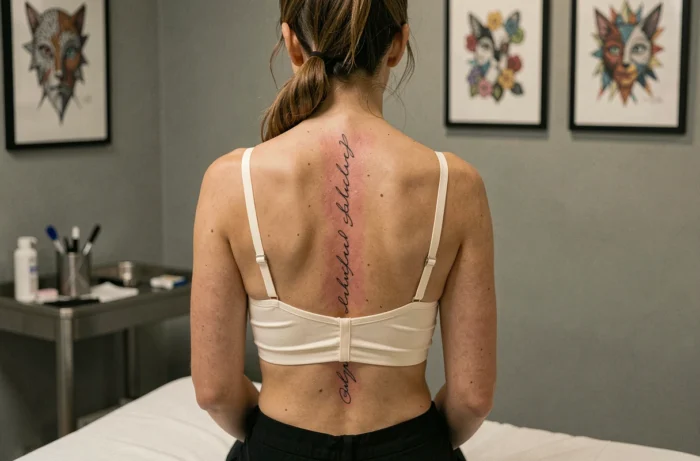
When choosing to place text along the spine, the first surprise is not necessarily the pain itself, but the vibration. The needle works just a few millimeters from the spinous processes, and the bone transmits resonances that most other areas of the body do not produce. For a tattoo text on the spine, this sensation of deep vibration accompanies each letter, each flourish, from the beginning to the end of the session.
Bone vibrations and radiating pain during a session on the spine
On the back, the skin varies in thickness depending on whether you are at the top (cervical), in the middle (thoracic), or at the bottom (lumbar). The upper back, where the layer of subcutaneous tissue is thin, allows vibrations to pass more easily to the vertebrae. The lumbar area, better cushioned, dampens some of the mechanical impact.
What distinguishes the spine from other areas known to be painful (ribs, feet, sternum) is the sensation of radiation along the spinal nerves. Sometimes you may feel a tingling that descends towards the flanks or rises towards the nape of the neck, unrelated to the tattooed area at that moment. This radiation is surprising, but it is normal and temporary.
Specifically, for a fine text tattoo (one to three lines of calligraphy), the session usually lasts between one and three hours depending on the length of the text. The pain remains manageable for the first several minutes, then the area becomes more sensitive as the skin becomes inflamed. Planning a session for tattoo text on the spine on a day when you are well-rested, well-hydrated, and alcohol-free since the day before really changes the tolerance threshold.
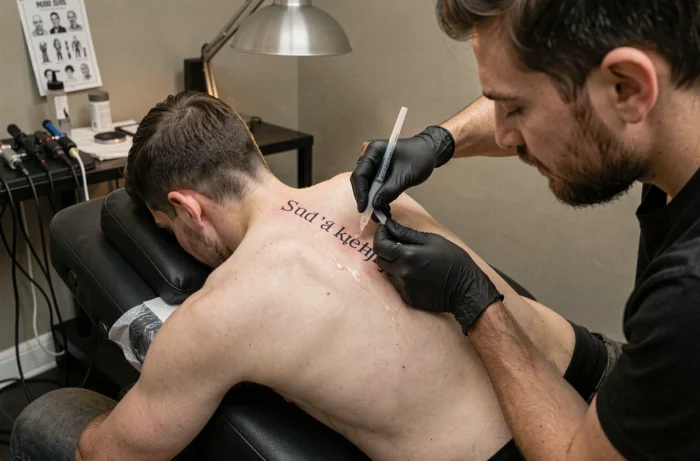
Topical anesthetics on the back: a false comfort to be aware of
We are often asked if applying a topical anesthetic before the session eliminates pain. The short answer: it reduces it, but not without trade-offs.
High concentrations of topical anesthetics can degrade the quality of healing. The vasoconstrictive effect of certain formulas reduces local blood flow, which slows tissue repair in the following days. This point is rarely addressed by studios, even though it is particularly important on the spine, where the skin is thin and the vascularization is already modest at the bony ridges.
If the tattoo artist offers an anesthetic, it is better to discuss the concentration and the area covered. A light application on the most prominent vertebrae remains a reasonable compromise. Covering the entire back with a thick layer exposes you to prolonged post-session pain and a less clear result once healing is complete.
Healing a text tattoo on the spine: two distinct phases
The healing of the back follows a two-phase pattern that many clients do not suspect.
Surface phase: the first three weeks
The skin closes, fine scabs form and then fall off. During this period, one feels a discomfort comparable to a moderate sunburn. Clothes rub against the vertebrae and can irritate the area. Wearing loose cotton tops, without a central back seam, limits this discomfort.
- Wash the area twice a day with lukewarm water and mild soap, without scrubbing, by patting with a clean towel
- Apply a thin layer of healing balm recommended by the tattoo artist (avoid overly greasy ointments that suffocate the skin)
- Do not expose the tattoo to direct sunlight or immerse the back in a bath, pool, or sea
- Avoid alcoholic antiseptics, which dry out the skin and delay healing
Deep phase: beyond the first month
The skin appears healed on the surface, but the deeper layers continue to repair for several weeks. This is when residual sensations appear: pulling when bending the back, localized itching, slight stiffness upon waking. These signals are not alarming, but they indicate that the dermis has not finished its work.
A fine text tattoo, with delicate lines, requires special care during this phase. Any touch-ups (letters whose ink has slightly migrated or faded) should only be scheduled once deep healing is complete, generally two to three months after the initial session.
Posture and movements of the back during healing
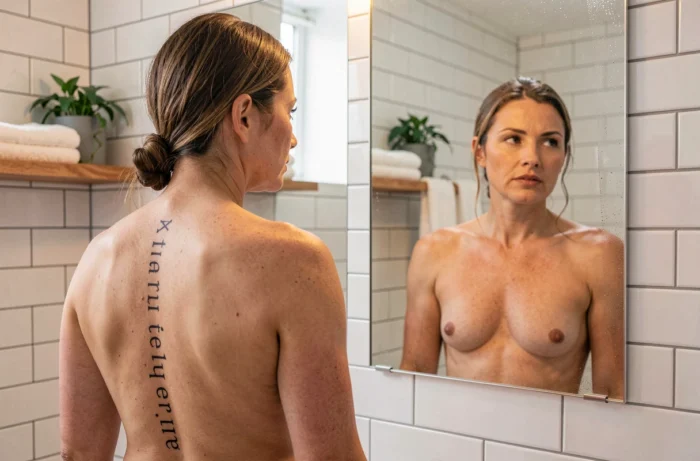
The spine moves constantly: flexion, rotation, extension. You cannot immobilize your back as you would immobilize a wrist. This constant mobility is the factor that clients underestimate the most.
During the first two weeks, avoiding large twisting movements of the torso protects the lines of the tattoo. Intense sports sessions (back weightlifting, yoga with deep twists, swimming) should be postponed. Feedback varies on this point; some resume light activity as early as the second week without issues, but caution pays off on a text tattoo where every fine line counts.
Sleeping on your stomach or side during the first week avoids compressing the area against the mattress. For those who usually sleep on their back, placing a pillow under the knees helps reduce lumbar contact with the sheet.
Fine lines on prominent vertebrae: long-term maintenance
A technical detail deserves to be clearly stated. Fine line text tattoos on the spine age differently depending on the area. On prominent vertebrae, the skin is subjected to more friction (chair backs, backpacks, seat belts). These repeated frictions over the years can blur certain lines faster than elsewhere on the back.
The choice of typography has a direct impact on longevity. Fonts with thin serifs or very close letters risk merging over time. An experienced tattoo artist with this type of design will adjust the spacing between letters and the minimum thickness of the line to anticipate this aging.
Sun protection remains the most effective long-term gesture. An SPF 50 sunscreen applied to the back before any prolonged exposure preserves the contrast of the ink and slows the diffusion of pigments in the dermis. This reflex applies to all tattoos, but for fine lines, it makes a visible difference in just a few summers.