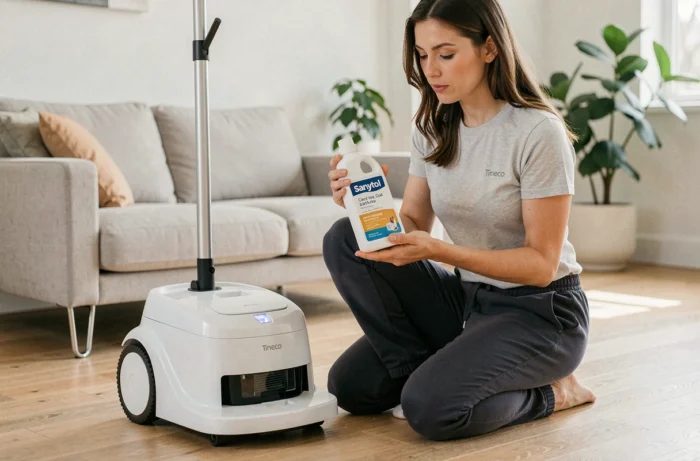
Tineco floor washers are equipped with sensors and a hydraulic circuit calibrated for a specific type of detergent. Using Sanytol foam in a Tineco’s tank poses a concrete technical problem related to foam production, beyond the simple issue of fragrance or disinfecting power.
Foam and hydraulic circuit: what happens in a Tineco
A Tineco floor washer operates with a system of separate tanks (clean water, dirty water) and a pump that circulates the liquid to the roller. This circuit is designed for low surface tension solutions, which generate almost no foam.
Sanytol foam, as its name suggests, is formulated to produce active foam upon contact with the floor. In the closed circuit of a Tineco, this foam gets sucked into the dirty water tank and then rises into the internal conduits. Tests conducted on the Floor One i5 Stretch, S6 Stretch, and iFloor 5 Breeze models confirm that foaming products can clog the water circuit and damage the pump.
A detailed article discusses Sanytol floor foam on Zam Création D’Intérieurs with the precautions to know before any use.
The problem is not limited to temporary clogging. Foam trapped in the conduits can reach the smart sensors that regulate water flow and suction power. Once these sensors are covered with a film of surfactant, the device loses its automatic adjustment capability.
Tineco warranty and third-party detergents: what recent manuals say
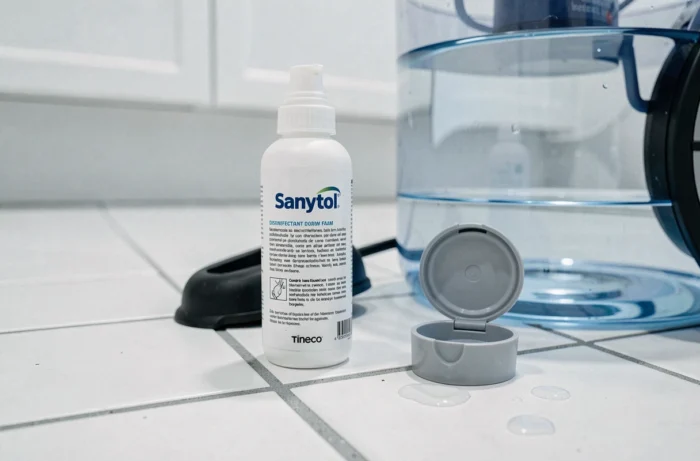
The 2024-2026 manuals for Tineco floor washers have tightened their stance. The instruction is now explicit: use only the Tineco brand deodorizing and cleaning solution. The documents make no distinction between a reduced dosage and a normal dosage of third-party products.
This formulation has a direct consequence on the warranty. The use of acidic, alkaline, or third-party solutions can damage internal components, and this type of damage is not covered by the warranty. The standard warranty period is generally two years, but it becomes void if the device shows signs of unapproved detergent upon return to service.
Some users on forums report having used liquid Sanytol (not the foam version) with a half-cap without apparent damage. The key word remains “apparent”: damage to internal seals or the pump may take several months to manifest, well after the period when a return would be easy to justify.
Sanytol foam vs. liquid Sanytol: a common confusion
Sanytol comes in several formats, and the distinction matters. The “foam” version (floor foam) is the most problematic for a floor washer because it generates a significantly higher volume of foam than the multi-surface liquid version.
The characteristics that oppose them in the context of a Tineco:
- Sanytol foam produces dense foam upon contact with water, quickly saturating the dirty water tank and internal conduits
- Multi-surface liquid Sanytol generates less foam, which explains why some users tolerate it in small doses, although Tineco formally advises against it
- At Rowenta (X-Clean models), multi-surface liquid Sanytol is deemed compatible by several specialized guides, but this documented tolerance at Rowenta does not apply to Tineco
The confusion between the two formats is common in online discussions. When a user claims “Sanytol works very well in my Tineco,” they often refer to the liquid version at minimal dosage, not the foam.
The case of reduced dosage
A half-cap of Sanytol foam in a full tank reduces the amount of surfactants but does not eliminate the underlying problem. Foam forms through mechanical contact with the roller, not just based on concentration. Even diluted, the product foams upon friction, and it is precisely this friction that is constant in a floor washer.
Alternatives compatible with Tineco sensors
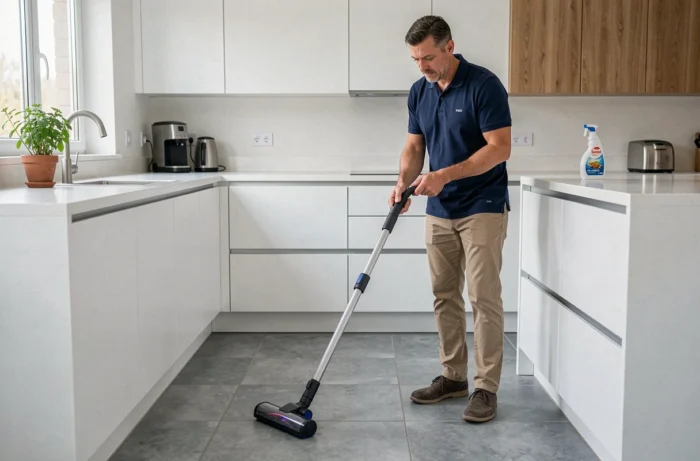
The official Tineco solution (deodorizing and cleaning solution) is formulated to not foam and not leave residue on the sensors. Its cost is higher than a standard household product, but it is the only option that preserves the warranty and the operation of the smart sensors.
For those looking to reduce the cost per wash, a few options exist:
- Clear water alone is suitable for regular maintenance on lightly soiled floors, and Tineco devices are designed to operate effectively with water without additives
- Generic “floor washer special” detergents with low foaming power are available from several third-party manufacturers, but it is necessary to check for the absence of “foam” or “foaming” on the label
- White vinegar, often cited as a natural alternative, is discouraged by Tineco due to its acidity, which can damage seals and internal components over the long term
Roller maintenance after using a bad detergent
If Sanytol foam has already been used in a Tineco, immediately rinsing the circuit with clear water by running several self-cleaning cycles helps limit deposits. The roller should be removed and rinsed by hand under running water to eliminate trapped surfactant residues in the fibers.
The filter also deserves special attention. A filter clogged with foaming residues loses its filtration capacity and forces the pump to work harder, accelerating its wear.
Using Sanytol foam in a Tineco poses a measurable risk to the pump, sensors, and warranty, for a disinfecting benefit that the device was not designed to deliver. The foam version is the riskiest of the Sanytol variations, and the Tineco manuals leave no room for interpretation regarding the use of third-party detergents.